Last updated: June 2026
English Grammar Tenses: CI Guide
English has 12 tenses. CI acquires all 12 naturally. Grammar study adds 5-10% speed. Focus on CI, not tense charts.
Stop fearing the tense charts
English grammar tenses are probably the most over-studied and over-feared part of the language. Learners spend months drilling charts of twelve tenses and still freeze in conversation, because knowing the rule for the present perfect is not the same as feeling when to use it. The reassuring truth is that you do not need to memorise tables to use tenses correctly — native speakers never learned them that way. Your brain is built to extract tense patterns from meaning, given enough exposure. This guide explains what the tenses actually are, why comprehensible input handles them better than drills, and how to clean up the few that genuinely cause trouble.
The 12 English tenses
Technically, English organises tense into a tidy grid: three simple, three continuous, three perfect, and three perfect continuous, across past, present, and future — twelve in total. It looks intimidating on a chart, but the practical reality is far gentler. In real speech and writing, just four tenses carry roughly 80 percent of everything you will hear: the simple present ("I work"), the simple past ("I worked"), the present continuous ("I am working"), and the present perfect ("I have worked"). The exotic-looking forms like the future perfect continuous exist, but they appear so rarely that you will absorb them effortlessly long before you ever need to produce one. Master the common four through exposure and the rest follow on their own.
Move the slider: how much of a video at this level do you understand?
Why CI beats grammar drills for tenses
Tenses are about meaning in context — when something happened, whether it is finished, how it relates to now — and meaning is exactly what comprehensible input delivers and grammar drills strip away. When you hear "I have lived here for ten years" inside a real story, your brain links the present perfect to its actual feeling of an ongoing situation, without any rule. Do that across hundreds of natural examples and tense selection becomes intuition rather than calculation. Explicit rules still have a small role — they can give you a quick label for something you keep noticing — but they cannot replace the exposure. The efficient mix is roughly 90 percent input and 10 percent targeted grammar reference, used only when a specific error keeps recurring.
The tenses that actually confuse people
A handful of tense contrasts cause the vast majority of real difficulty, and it helps to know them by name so you can notice them in your input. The big one is the present perfect versus the simple past: "I have seen that film" carries present relevance, while "I saw that film" simply places it in finished past time. Another is continuous versus simple: "I am thinking about it" describes an ongoing process, whereas "I think so" states a stable opinion. Speakers of languages that lack these distinctions feel them as genuinely foreign at first. The fix is not memorising the rule but meeting each contrast many times in clear context until the difference simply feels obvious.
Try comprehensible input now
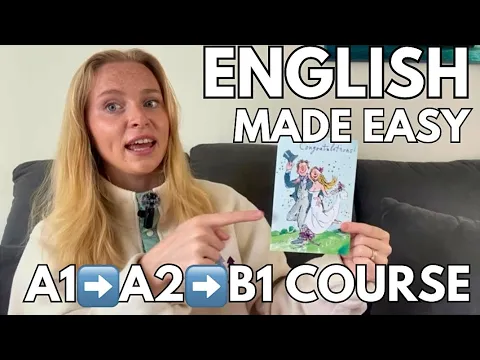
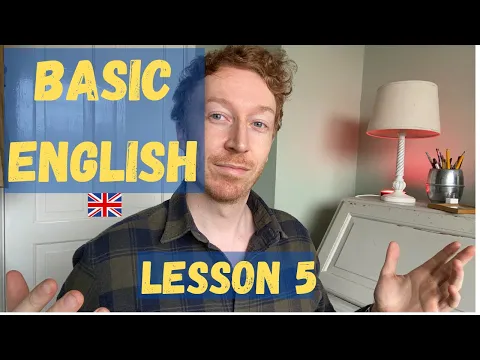
Real lessons at this level from our free library — pick one and watch.




Best CI sources for tense variety
Some content naturally serves up a richer mix of tenses than others, so choosing well speeds acquisition. Narrative material — stories, documentaries, and news reports — is the densest source because telling what happened, what is happening, and what it means forces speakers through past, present, and perfect forms constantly. To round out the picture, mix genres deliberately: storytelling and history pour out past tenses, interviews and reflections are full of the present perfect, and live commentary or vlogs keep the continuous flowing. You do not need to track which tense appears where; simply by enjoying varied narrative content you expose yourself to every form in its natural habitat, which is exactly how intuition is built.
When intuition replaces the rules
The destination is the same place native speakers live: choosing tenses by feel, not by recalling a rule. They do not pause to decide between the present perfect and the simple past — the right form simply sounds correct, because they have heard each one in its proper context tens of thousands of times. With a comprehensible-input approach you reach the same place; somewhere around B2, after a few hundred hours, tense selection becomes largely automatic and the charts you once feared turn into trivia. If, even after that much input, one specific contrast still trips you up, that is the rare moment a focused hour or two of grammar reference pays off — a quick label to sharpen a pattern your ears have nearly learned. Otherwise, keep feeding the intuition and let the rules fade into the background.
How much everyday English speech can you follow?
Can you watch a show with English subtitles?
How comfortable is a real conversation?
Suggested starting level:
Do I need to understand every word?
No. If you follow the overall meaning — roughly 70–90% — the video is working. Missing some words is normal and your brain fills the gaps from context.
How long until I can speak?
Speaking emerges naturally once you have enough input — often after a silent period of months. Forcing speech too early mostly produces translation and stress. Let understanding lead.
Should I use subtitles?
Use English subtitles as a bridge, then rewatch without them. Avoid subtitles in your own language — they let your brain skip the listening and slow acquisition.
How much should I watch per day?
Consistency beats marathons. Even 15–30 focused minutes daily adds up to 90–180 hours a year — enough to cross a CEFR level. A habit you keep beats an ambitious plan you drop.