Last updated: June 2026
English Idioms in Context: How CI Acquires Fixed Expressions
Why studying idiom lists rarely works — and how comprehensible input acquires "bite the bullet," "kick the bucket," and 500 other idioms far more efficiently through contextual encounter.
The problem with memorizing idiom lists
Idiom lists fail because idioms are contextual: you cannot predict when to use them without hearing them in use. Knowing that 'under the weather' means sick does not tell you the register (casual, not formal), the typical contexts (physical illness, not emotional), or the delivery (sympathetic tone). All of this context is acquired through CI encounter, not list memorization.
How CI acquires idioms naturally
When you hear "bite the bullet" in 5 different CI videos across different situations, you acquire not just the meaning but the full pragmatic competence: when to use it, who uses it, the tone that accompanies it. This multi-context acquisition is impossible with a dictionary. The CI target: 300+ hours generates exposure to 200-400 high-frequency idioms in natural context.
Move the slider: how much of a video at this level do you understand?
Most common English idioms by register
High-frequency idioms cluster by register. Casual: "break a leg," "hit the sack," "spill the beans," "let the cat out of the bag." Professional: "think outside the box," "touch base," "on the same page," "move the needle." Academic: "shed light on," "calls into question," "serves to illustrate." CI naturally exposes you to idioms in the register where they are used.
Try comprehensible input now
Real lessons at this level from our free library — pick one and watch.





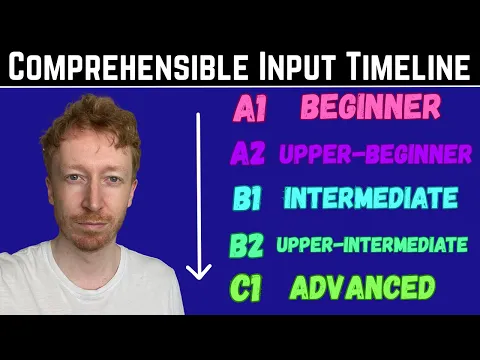
Idiom acquisition by CEFR level
A1-A2: avoid idiom focus — prioritize literal vocabulary. B1: start noticing and acquiring common casual idioms. B2: target professional and academic idioms relevant to your domain. C1: idiomatic fluency should develop naturally from CI volume — you should be acquiring idioms without conscious effort. If you reach B2 and still lack idiom fluency, increase input hours.
CI Method English for idiom acquisition
CI Method English naturally features idioms in storytelling, explanations, and conversations. At B1-B2, watch CI videos and note any multi-word expressions you hear that carry a non-literal meaning. Do not stop to look them up during viewing — record them and research after. After 20 sessions of this approach, you will notice a dramatic increase in idiom recognition speed.
How much everyday English speech can you follow?
Can you watch a show with English subtitles?
How comfortable is a real conversation?
Suggested starting level:
Do I need to understand every word?
No. If you follow the overall meaning — roughly 70–90% — the video is working. Missing some words is normal and your brain fills the gaps from context.
How long until I can speak?
Speaking emerges naturally once you have enough input — often after a silent period of months. Forcing speech too early mostly produces translation and stress. Let understanding lead.
Should I use subtitles?
Use English subtitles as a bridge, then rewatch without them. Avoid subtitles in your own language — they let your brain skip the listening and slow acquisition.
How much should I watch per day?
Consistency beats marathons. Even 15–30 focused minutes daily adds up to 90–180 hours a year — enough to cross a CEFR level. A habit you keep beats an ambitious plan you drop.