Last updated: June 2026
IELTS Listening Practice: A Comprehensible Input Approach
How to use natural English video input to build the listening skills needed for IELTS, TOEFL, and other standardized tests.
What IELTS listening actually tests
IELTS listening tests your ability to follow natural English audio across four section types: everyday social conversations, monologues on general topics, academic discussions, and academic lectures. The key skill is processing connected speech at natural speed — exactly what comprehensible input training builds.
Why CI training outperforms IELTS-specific drill books
Practice tests build test-taking strategies but not underlying listening ability. Every hour with an IELTS drill is one hour not building real comprehension. Learners who invest 500+ hours in comprehensible input before test prep consistently outperform those who only drill. CI builds the foundation; test prep calibrates the format.
Move the slider: how much of a video at this level do you understand?
Recommended CI diet for IELTS B2 target (band 6.5+)
Target 300-500 hours of B1-B2 CI before your test date. Use CI Method English: filter by B1 and B2 levels, mix American and British accents (both appear on IELTS), and include academic and conversational topics. In the final 4-6 weeks, add 2-3 official IELTS practice tests per week to calibrate format expectations.
Try comprehensible input now
Real lessons at this level from our free library — pick one and watch.





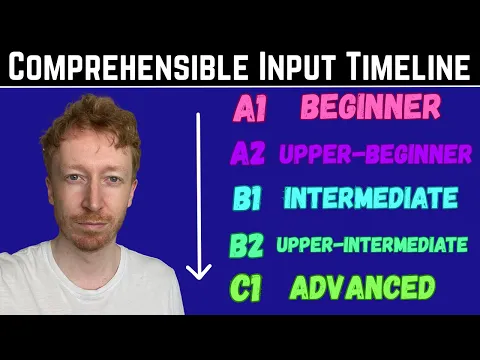
Accent exposure: American vs British English for IELTS
IELTS uses British, Australian, American, and New Zealand accents across its listening sections. Most learners over-expose themselves to one accent. Use CI Method English accent filters to deliberately rotate through American and British input. Aim for at least 30% of your hours from the accent that feels least natural to you.
Tracking progress toward your target band score
Every 50 hours of CI, take one official IELTS practice test to measure your current band. Log your scores and input hours together. If your score plateaus for 100+ hours, review what content you are watching: you may have drifted to easy input below your current level. Push to the next CEFR level in CI Method English.
How much everyday English speech can you follow?
Can you watch a show with English subtitles?
How comfortable is a real conversation?
Suggested starting level:
Do I need to understand every word?
No. If you follow the overall meaning — roughly 70–90% — the video is working. Missing some words is normal and your brain fills the gaps from context.
How long until I can speak?
Speaking emerges naturally once you have enough input — often after a silent period of months. Forcing speech too early mostly produces translation and stress. Let understanding lead.
Should I use subtitles?
Use English subtitles as a bridge, then rewatch without them. Avoid subtitles in your own language — they let your brain skip the listening and slow acquisition.
How much should I watch per day?
Consistency beats marathons. Even 15–30 focused minutes daily adds up to 90–180 hours a year — enough to cross a CEFR level. A habit you keep beats an ambitious plan you drop.