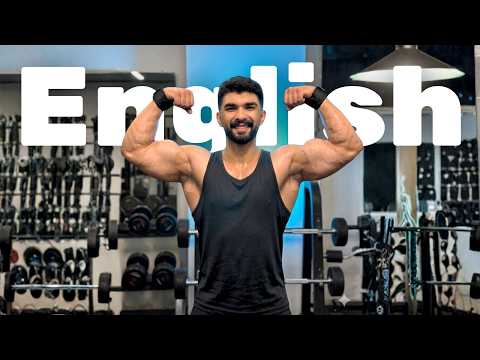
Английский для спортивной науки: ключевая лексика
Это руководство охватывает профессиональную английскую лексику, необходимую специалистам по спортивной науке, тренерам, физиотерапевтам, диетологам и спортивным психологам — от VO₂max и анаэробного порога до биомеханического анализа сил, периодизации, ментальных образов и научно обоснованной реабилитации после травм.
48 terms · 6 topics
"aerobic capacity"
The maximum rate at which the body can consume oxygen during sustained exercise, also expressed as VO₂max, reflecting cardiovascular and muscular efficiency
"The athlete's aerobic capacity of 72 ml/kg/min placed her among the elite tier of distance runners in the national programme."
"anaerobic threshold"
The exercise intensity at which lactic acid begins to accumulate in the blood faster than it can be cleared, marking the boundary between sustainable and unsustainable effort
"Training at or just below the anaerobic threshold is the most effective strategy for improving an athlete's race pace over 10 km."
"muscle hypertrophy"
The increase in size of skeletal muscle fibres in response to resistance training, driven by mechanical tension, metabolic stress, and muscle damage signals
"The strength and conditioning coach prescribed progressive overload to stimulate muscle hypertrophy in the off-season training block."
"cardiac output"
The volume of blood pumped by the heart per minute, calculated as heart rate multiplied by stroke volume, which increases substantially during maximal exercise
"In trained endurance athletes, cardiac output can reach 35 litres per minute during maximal effort, compared to roughly five litres at rest."
"oxygen debt"
The additional oxygen consumption above resting levels that occurs after exercise to restore the body to its pre-exercise state, also called excess post-exercise oxygen consumption (EPOC)
"The sprinter's heavy breathing after crossing the finish line reflected the oxygen debt incurred during the 400-metre race."
"fast-twitch fibres"
Skeletal muscle fibres that contract rapidly and forcefully but fatigue quickly, making them suited to high-intensity, short-duration activities such as sprinting and jumping
"Sprinters typically have a higher proportion of fast-twitch fibres than marathon runners, a characteristic that is largely genetically determined."
"thermoregulation"
The physiological process by which the body maintains its core temperature within a narrow range during exercise, primarily through sweating, skin blood flow, and behaviour
"Athletes competing in hot and humid conditions must pay close attention to thermoregulation by staying hydrated and reducing exercise intensity when necessary."
"glycogen depletion"
The exhaustion of glycogen stores in muscles and the liver during prolonged exercise, associated with a sudden drop in performance commonly known as "hitting the wall"
"Marathon runners typically experience glycogen depletion around the 30-kilometre mark if they have not followed a proper carbohydrate fuelling strategy."
"ground reaction force"
The force exerted by the ground on the body in response to the force the body applies to the ground, equal in magnitude and opposite in direction according to Newton's third law
"High-speed force plate analysis revealed that the sprinter's ground reaction force at toe-off exceeded three times her body weight."
"centre of mass"
The point in a body or system at which the entire mass can be considered to be concentrated for the purpose of calculating translational motion and balance
"The gymnastics coach explained that lowering the centre of mass by bending the knees significantly improves rotational stability on the balance beam."
"angular momentum"
The quantity of rotational motion of a body, equal to the product of its moment of inertia and angular velocity, which is conserved in the absence of external torques
"Figure skaters exploit the conservation of angular momentum by pulling their arms close to the body to spin faster."
"kinematic chain"
A series of rigid body segments connected by joints through which forces and motions are transmitted during athletic movements
"In the golf swing, the kinematic chain begins at the ground and transfers energy progressively through the legs, hips, trunk, and finally the club."
"eccentric contraction"
A muscle action in which the muscle produces force while lengthening, as occurs in the quadriceps when landing from a jump, which generates greater force than concentric contraction
"Eccentric contraction exercises such as Nordic hamstring curls are widely used in injury prevention programmes because they strengthen the muscle at its most vulnerable length."
"propulsive force"
The component of a ground reaction force or fluid force that acts in the direction of intended movement, driving the athlete forward, upward, or through the water
"Biomechanists isolated the propulsive force contribution from each leg using a split-belt treadmill to assess asymmetry in the runner's stride."
"drag coefficient"
A dimensionless measure of the aerodynamic or hydrodynamic resistance of a body moving through a fluid, which depends on shape, surface texture, and speed
"The cycling team's wind-tunnel tests showed that the new helmet design reduced the drag coefficient by eight per cent compared to the previous model."
"moment of inertia"
A measure of the resistance of a rotating body to changes in its angular velocity, determined by the distribution of mass relative to the axis of rotation
"A javelin thrower reduces the moment of inertia of the throwing arm by keeping the elbow high and the implement close to the head during the acceleration phase."
"carbohydrate loading"
A nutritional strategy used before endurance events in which an athlete significantly increases carbohydrate intake over several days to maximise muscle and liver glycogen stores
"The triathlete followed a carbohydrate loading protocol in the 72 hours before the race, increasing her daily carbohydrate intake to ten grams per kilogram of body weight."
"energy availability"
The amount of dietary energy remaining for normal physiological functions after the energy cost of exercise training has been subtracted from total energy intake
"Chronic low energy availability in female athletes can disrupt hormonal function, impair bone density, and reduce immune function, a syndrome known as the Female Athlete Triad."
"protein synthesis"
The cellular process by which amino acids are assembled into new protein molecules, which is stimulated by resistance exercise and adequate dietary protein intake to support muscle repair and growth
"Consuming 20 to 40 grams of high-quality protein within the post-exercise window maximises the rate of protein synthesis in the recovering muscle."
"hydration status"
The level of water and electrolyte balance in the body, which directly affects thermoregulation, cardiovascular function, and cognitive performance during exercise
"The sports dietitian assessed the athlete's hydration status by measuring urine specific gravity and found him mildly dehydrated before the morning training session."
"ergogenic aid"
Any substance, device, or method used to enhance exercise performance beyond normal levels, including legal supplements such as caffeine and creatine as well as prohibited substances
"Meta-analyses consistently show that caffeine is one of the most effective legal ergogenic aids, improving endurance performance by two to four per cent across a wide range of sports."
"glycaemic index"
A ranking of carbohydrate-containing foods on a scale from 0 to 100 based on how rapidly they raise blood glucose after consumption, with higher values indicating faster absorption
"Sports nutritionists generally recommend low glycaemic index foods in the hours before competition but high glycaemic index options during and immediately after prolonged exercise."
"leucine threshold"
The minimum concentration of the essential amino acid leucine required in the blood to maximally stimulate muscle protein synthesis after exercise
"Whey protein is particularly effective at triggering muscle repair because its high leucine content reliably exceeds the leucine threshold within 30 minutes of ingestion."
"nutrient timing"
The strategic scheduling of food and fluid intake around exercise sessions to optimise performance, recovery, and adaptations to training
"The nutrition periodisation plan outlined specific nutrient timing windows for the swimmer, with carbohydrate-rich meals before hard sessions and protein-focused recovery meals afterwards."
"flow state"
A peak psychological state of complete absorption in an activity, characterised by effortless concentration, loss of self-consciousness, and an intrinsic sense of enjoyment and control
"The gymnast described entering a flow state during her final routine, during which the entire programme felt automatic and she was unaware of the crowd around her."
"self-efficacy"
An individual's belief in their own ability to execute the behaviours necessary to produce specific outcomes, which is one of the strongest predictors of athletic performance and persistence
"The sport psychologist used mastery experiences and verbal encouragement to build self-efficacy in the young swimmer ahead of her first international competition."
"arousal regulation"
The ability to manage one's physiological and psychological activation level to reach the optimal zone of arousal for a given sporting task
"Unlike contact sport athletes who may benefit from higher arousal, golfers and archers typically require arousal regulation techniques such as deep breathing to lower their activation to optimal levels before each shot."
"cognitive anxiety"
The mental component of competitive anxiety, characterised by worry, negative thoughts, and concerns about performance expectations and potential failure
"In the week before the championship, the tennis player reported significant cognitive anxiety, including recurring thoughts about double-faulting at critical moments."
"attentional focus"
The direction and intensity of an athlete's concentration during performance, which can be oriented internally toward body movements or externally toward environmental outcomes and goals
"Research consistently shows that an external attentional focus — on the target or desired outcome — produces more accurate and efficient movements than an internal focus on limb mechanics."
"mental imagery"
A cognitive technique in which an athlete vividly imagines performing a skill or competing in an event using multiple senses, used to rehearse technique, build confidence, and manage anxiety
"The bobsled team spent 20 minutes before each competition using mental imagery to rehearse every turn of the course, a technique shown to reduce decision time during actual runs."
"burnout"
A sport-specific syndrome characterised by physical and emotional exhaustion, sport devaluation, and a perceived sense of reduced accomplishment, resulting from chronic stress and inadequate recovery
"The young swimmer's withdrawal from the programme was later understood to reflect classic burnout, driven by years of early specialisation and relentless competition schedules."
"intrinsic motivation"
The drive to participate in sport for its own inherent satisfaction and enjoyment rather than for external rewards such as trophies, recognition, or financial incentives
"Athletes who maintain strong intrinsic motivation tend to show greater long-term commitment to training and report higher levels of well-being throughout their careers."
"periodisation"
The systematic planning of an athlete's training over time into structured phases of varying volume, intensity, and specificity to peak performance at the right moment
"The strength coach used a block periodisation model, sequencing accumulation, transmutation, and realisation phases to bring the powerlifter to peak condition for the national championships."
"progressive overload"
The principle that training adaptations require a gradual and systematic increase in the demands placed on the body over time, typically achieved by increasing load, volume, or intensity
"By applying progressive overload and adding five kilograms to the squat each week for three months, the athlete increased her one-repetition maximum from 80 to 100 kilograms."
"rate of force development"
The speed at which muscular force can be generated from the onset of a contraction, which is critical for explosive sports where contact times with the ground or implement are very short
"Plyometric training and heavy compound lifts are both effective methods for improving rate of force development in team sport athletes."
"supercompensation"
The physiological adaptation process in which the body, following a training stress and adequate recovery, temporarily surpasses its previous performance capacity before returning to baseline
"The training plan was structured to ensure the athlete reached the peak of supercompensation — the highest point of readiness — in the week of the major competition."
"functional movement screen"
A standardised battery of seven movement tests used to identify asymmetries and movement pattern limitations that may predispose an athlete to injury or limit performance
"All incoming squad members completed the functional movement screen during pre-season testing, and those who scored below the threshold were referred for corrective exercise protocols."
"deload week"
A planned period of reduced training volume and intensity inserted into a programme to allow accumulated fatigue to dissipate and permit tissue remodelling and neural recovery
"After four weeks of high-intensity training, the coach scheduled a deload week during which total volume was cut by 50 per cent to ensure full recovery before the next training block."
"plyometric training"
A form of exercise that involves rapid stretch-shortening cycles — eccentric loading immediately followed by explosive concentric contraction — to develop power and reactive strength
"The basketball player's vertical jump improved by eight centimetres after a six-week plyometric training intervention incorporating depth jumps and hurdle hops."
"isometric strength"
The maximum force a muscle can exert without changing length, measured in a fixed joint position, which correlates with dynamic strength and is used both in testing and in rehabilitation
"Mid-thigh pull isometric strength testing is widely used in professional rugby to monitor readiness and detect residual fatigue after congested fixture schedules."
"anterior cruciate ligament"
One of the four major ligaments of the knee joint, which resists anterior tibial translation and rotational forces; tears of this ligament are among the most common and serious injuries in pivoting sports
"The football player's anterior cruciate ligament rupture during a cutting manoeuvre required reconstructive surgery and nine months of rehabilitation before he could return to full training."
"overuse injury"
A musculoskeletal injury caused by repetitive microtrauma and insufficient recovery time rather than a single acute event, often resulting from rapid increases in training load
"The distance runner's tibial stress fracture was an overuse injury attributed to a 40 per cent increase in weekly mileage over just three weeks."
"delayed onset muscle soreness"
The muscle pain, stiffness, and tenderness that develops 12 to 72 hours after unaccustomed or high-intensity eccentric exercise, caused by microscopic structural damage to muscle fibres
"The novice rower experienced significant delayed onset muscle soreness in the back and arms two days after her first full ergo session of the season."
"return to play protocol"
A structured, graduated programme that guides an injured athlete back to full sport participation through progressive stages, with criteria that must be met before advancing to the next phase
"Following ACL reconstruction, the physiotherapist used a nine-month return to play protocol that included strength benchmarks, hop tests, and sport-specific movement assessments at each stage."
"proprioception"
The body's ability to sense its own position, movement, and force in space through sensory receptors in muscles, tendons, and joints, which is critical for balance, coordination, and injury prevention
"Balance board and single-leg stability exercises are incorporated into rehabilitation programmes because they directly train the proprioception that is often impaired after ankle sprains."
"inflammation cascade"
The multi-stage biological response to tissue injury involving vasodilation, increased permeability, white blood cell migration, and cytokine signalling, which initiates healing but can become harmful if prolonged
"The team physician explained that while the initial inflammation cascade following a muscle strain is necessary for repair, excessive swelling can delay the remodelling phase if not managed appropriately."
"load management"
The systematic monitoring and manipulation of an athlete's total training and competition demands to optimise performance while reducing the risk of injury, illness, and burnout
"The sports science team used GPS data and wellness questionnaires to guide load management decisions throughout the season, keeping the squad's injury rate well below the league average."
"functional rehabilitation"
A philosophy of injury recovery that prioritises restoring the movements, strength, and sport-specific skills needed for athletic performance rather than focusing solely on the elimination of pain
"The physiotherapist transitioned the sprinter from passive treatments to functional rehabilitation exercises two weeks post-injury, incorporating running mechanics drills once pain-free walking was achieved."
Частые вопросы
Почему английский важен для специалистов в области спортивной науки?
Английский — доминирующий язык исследований и профессиональной практики в области спортивной науки по всему миру. Ведущие рецензируемые журналы — Journal of Applied Physiology, Medicine & Science in Sports & Exercise, British Journal of Sports Medicine и Sports Medicine — публикуются на английском языке. Международные тренерские лицензии, сертификации по мониторингу спортсменов и академические последипломные программы ведутся преимущественно на английском. Для специалиста по спортивной науке, физиотерапевта или тренера по силовой подготовке на профессиональном или элитном уровне владение техническим английским необходимо для изучения актуальных данных, общения с международными коллегами и составления отчётов о результатах.
Какие ключевые области лексики охватывает английский для спортивной науки?
Английский для спортивной науки охватывает шесть основных областей: физиология упражнений (VO₂max, анаэробный порог, мышечная гипертрофия, сердечный выброс), биомеханика (реакция опоры, кинематическая цепь, угловой момент, коэффициент аэродинамического сопротивления), спортивное питание (углеводная загрузка, доступность энергии, эргогенные средства, нутритивный тайминг), спортивная психология (состояние потока, самоэффективность, ментальные образы, регуляция активации), силовая подготовка (периодизация, прогрессивная перегрузка, плиометрические тренировки, скорость развития силы) и травмы с реабилитацией (протоколы возвращения в игру, управление нагрузкой, проприоцепция, функциональная реабилитация).
Сколько времени нужно, чтобы свободно говорить об этой теме по-английски?
Практики с общим уровнем английского B2 обычно могут читать и понимать аннотации и обзорные статьи по спортивной науке через два-три месяца целенаправленной работы над лексикой. Написание профессиональных отчётов о результатах и научных предложений требует, как правило, от шести месяцев до года регулярной работы с аутентичными научными текстами. Полная уверенность в устном профессиональном английском — для международных конференций, встреч мультидисциплинарных команд и консультаций со спортсменами — обычно приходит через один-два года постоянного погружения в реальную профессиональную коммуникацию в данной области.
Какой лучший способ изучить английский для спортивной науки?
Наиболее эффективный подход — понятный ввод: чтение журналов по спортивной науке, блогов практиков и тренерских учебников на вашем уровне, просмотр записей конференций и онлайн-курсов на английском, прослушивание профильных подкастов. Это формирует точный, ориентированный на доказательства язык, характерный для профессиональной коммуникации в данной области. Сочетание аутентичного контента с систематическим повторением лексики обеспечивает значительно более устойчивую беглость, чем заучивание списков слов.
Можно ли практиковать английский для спортивной науки через видео?
Безусловно. Видеоконтент — один из самых мощных доступных учебных ресурсов. Записи докладов на конференциях ACSM и NSCA, циклы лекций по спортивной науке в университетах, подкасты практиков и документальный контент о подготовке элитных спортсменов знакомят со всем спектром формальных и неформальных регистров, используемых профессионалами в данной области. Наблюдение за тем, как реальные учёные и тренеры объясняют свои методы, обучает точной лексике, логике аргументации и коммуникативным конвенциям профессиональной практики.
Самый быстрый способ усвоить профессиональный английский для спортивной науки — понятный ввод: реальные лекции, конференционные доклады и интервью практиков на вашем уровне.
Практикуйтесь с реальными видео →