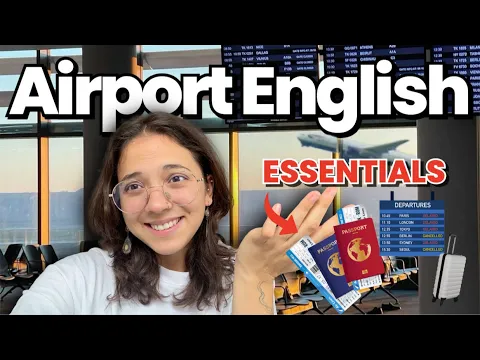
Английский для путешествий: ключевые фразы и лексика
Это руководство охватывает практическую английскую лексику, необходимую каждому путешественнику — от навигации в аэропорту и бронирования отелей до заказа еды, посещения достопримечательностей и решения непредвиденных ситуаций за рубежом.
48 phrases · 6 topics
"checked baggage allowance"
The maximum weight or number of bags a passenger may check in without paying extra fees
""My checked baggage allowance is 23 kg — I need to redistribute some weight before I get to the counter.""
"boarding pass"
The document or digital ticket that authorises a passenger to board a specific flight
""Could I see your boarding pass and passport, please?" the gate agent asked before scanning the barcode."
"connecting flight"
A second flight that a passenger must board at an intermediate airport to reach the final destination
""We have a short layover in Frankfurt for our connecting flight to Bangkok — only 55 minutes.""
"carry-on bag"
A piece of luggage small enough to be taken into the aircraft cabin and stored in the overhead compartment
"She packed only a carry-on bag to avoid waiting at baggage claim after the two-hour flight."
"aisle seat"
A seat positioned next to the central walkway of the aircraft, allowing easy access without climbing over others
""I always request an aisle seat so I can stretch my legs on long-haul flights.""
"customs declaration"
A form completed by arriving passengers listing goods that may be subject to duty or import restrictions
""Do I need to fill in a customs declaration for the wine I bought in France?" she asked at the arrivals desk."
"immigration officer"
A government official who checks passports and visas at a country's point of entry
"The immigration officer asked him to explain the purpose of his visit and how long he planned to stay."
"flight delay"
A situation in which a flight departs or arrives later than its scheduled time
""Due to a flight delay of three hours, the airline offered meal vouchers to all affected passengers.""
"room rate"
The price charged per night for a hotel room, which may vary by season or availability
""What is your room rate for a double room from Thursday to Sunday?" she asked the receptionist."
"early check-in"
Arriving at a hotel and being allowed into a room before the standard check-in time
""Is an early check-in possible? Our flight lands at 6 a.m. and we would love to freshen up.""
"late check-out"
Staying in a hotel room past the standard check-out time, often available for an extra fee
"They requested a late check-out until 2 p.m. so they could attend the morning conference without rushing."
"reservation confirmation"
An official notice, usually by email, confirming that a booking has been accepted and recorded
""Please show your reservation confirmation at the front desk upon arrival," said the booking website."
"complimentary breakfast"
A free morning meal included in the price of a hotel room
""Does the rate include complimentary breakfast, or is it charged separately?" the guest asked."
"housekeeping"
The hotel department responsible for cleaning rooms and changing towels and bed linen
"He put the "Do Not Disturb" sign on the door so housekeeping would not wake him during his nap."
"double occupancy"
A room rate or policy based on two guests sharing a room
""The price quoted is for double occupancy — it will be slightly less if you are travelling alone.""
"room service"
A hotel facility that allows guests to order food and drinks to be delivered directly to their room
""After the long journey we were too tired to go out, so we ordered room service and ate in bed.""
"one-way ticket"
A travel ticket that covers a journey in a single direction only, with no return trip included
""I'll take a one-way ticket to the city centre, please — I'm not sure when I'll come back.""
"return ticket"
A ticket covering both the outward journey and the journey back to the starting point
"Buying a return ticket in advance was significantly cheaper than purchasing two separate one-way fares."
"drop-off point"
The specific location where a passenger is left by a taxi, bus, or car service
""What is the nearest drop-off point to the museum?" he asked the ride-share driver."
"rush hour"
The busiest period of the day for traffic and public transport, typically during morning and evening commutes
""Try to avoid the metro during rush hour — the trains are packed and delays are common.""
"car rental agreement"
A legal contract between a driver and a car hire company specifying the terms, costs, and insurance of the rental
"She read the car rental agreement carefully before signing, paying attention to the insurance excess clause."
"transit card"
A reloadable payment card used to pay for journeys on public transport systems in a city
""You'll need a transit card for the bus and subway — you can buy one at any station kiosk.""
"platform"
The raised area alongside a railway track from which passengers board or alight from trains
""Your train to Edinburgh departs from platform 7 in ten minutes," announced the station assistant."
"transfer"
A change from one vehicle or transport line to another during a journey
""You will need to make a transfer at Central Station — change to the blue metro line heading north.""
"set menu"
A fixed selection of courses offered at a single price, often representing better value than ordering à la carte
""We went for the three-course set menu — it was excellent value and included a glass of wine.""
"dietary restriction"
A limitation on what a person can eat due to health, religion, ethics, or allergy
""Please let the waiter know about any dietary restrictions before ordering — the chef can usually accommodate requests.""
"the bill"
The printed or verbal statement of the total amount owed for food and drinks in a restaurant
""Could we have the bill, please? We need to catch a train in twenty minutes," she told the waiter."
"cover charge"
A fixed fee added to a restaurant bill per person, sometimes covering bread, water, or table service
"The cover charge of €3 per person surprised them until the waiter explained it included fresh bread and still water."
"tip"
A voluntary extra payment given to service staff to acknowledge good service
""Is it customary to leave a tip here, or is service included in the bill?" the tourist asked the hotel concierge."
"to split the bill"
To divide a restaurant or bar tab among the members of a group, each paying their share
""Shall we split the bill equally, or would you prefer to pay only for what you ordered?""
"takeaway"
Food prepared by a restaurant or food outlet intended to be eaten off the premises
""We grabbed a takeaway from a street stall and ate it in the park while watching the sunset.""
"local specialty"
A dish or food product that is characteristic of a particular region and not easily found elsewhere
""Always try the local specialty — it is the best way to experience the culture of a place.""
"guided tour"
A sightseeing excursion led by a knowledgeable guide who explains the history and significance of locations visited
""We booked a guided tour of the old city in the morning — the guide's stories brought every building to life.""
"admission fee"
The price charged to enter a museum, gallery, park, or tourist attraction
""The admission fee is €15 for adults and €8 for students — children under 12 enter free.""
"skip-the-line ticket"
A pre-purchased ticket that allows the holder to bypass the standard queue at a popular attraction
"Buying a skip-the-line ticket for the Vatican saved them nearly two hours of queuing in the summer heat."
"audio guide"
A handheld device or smartphone application that provides recorded commentary about exhibits or locations
""I prefer an audio guide to a group tour — I can linger over the paintings I love without feeling rushed.""
"off the beaten track"
A location or activity that is away from popular tourist routes and less visited by mainstream travellers
""The best meals we had were in a tiny trattoria off the beaten track that locals had recommended.""
"opening hours"
The scheduled times during which a business, museum, or attraction is open to visitors
""Check the opening hours before you go — many museums in this city close on Mondays.""
"cultural etiquette"
The expected norms of behaviour and respect when visiting a foreign country or community
""Understanding local cultural etiquette is essential — in many temples, you must remove your shoes before entering.""
"day trip"
An excursion made to a destination and back within a single day, without an overnight stay
""We did a day trip to the coastal village — it was only 40 minutes by train and absolutely worth it.""
"exchange rate"
The value at which one currency can be converted into another at a given moment
""The exchange rate at the airport kiosk was poor — we got much better rates at the bank in town.""
"travel insurance"
A policy that covers financial losses caused by trip cancellations, medical emergencies, or lost belongings while travelling
""Never travel without travel insurance — our bag was stolen and the policy covered everything we lost.""
"lost property office"
A place at a station, airport, or public venue where found items are stored and claims for lost belongings are handled
""He left his camera on the train and was directed to the lost property office at the main station.""
"embassy"
The official diplomatic mission of a country in a foreign nation, able to assist citizens with emergencies, lost passports, and legal issues
""If your passport is stolen abroad, contact your embassy immediately — they can issue emergency travel documents.""
"emergency services"
The public organisations, including police, ambulance, and fire brigade, that respond to crises and accidents
""Dial 112 to reach emergency services anywhere in the European Union if you witness an accident.""
"pickpocket"
A thief who steals valuables from a person's pockets or bag in a crowd without them noticing
""Be alert in busy tourist areas — pickpockets often work in pairs to distract and steal from travellers.""
"travel advisory"
An official government warning issued to citizens about safety risks, health concerns, or instability in a foreign country
""Before booking the trip, check your government's travel advisory for the destination country.""
"prescription medication"
A medicine that requires a doctor's written authorisation and may be subject to import restrictions when crossing borders
""Carry a copy of your prescription medication documentation in case customs officials ask to inspect it.""
Частые вопросы
Какие английские фразы нужны для путешествий за рубеж?
Самый важный туристический английский охватывает шесть областей: аэропорт и полёты (регистрация, посадка, таможня), отели (бронирование, заезд, запросы), передвижение (маршруты, билеты, транспорт), питание (заказ, диетические потребности, оплата), достопримечательности (экскурсии, билеты, культурный этикет) и экстренные ситуации (страховка, потеря документов, медицинская помощь). Уверенное владение этими шестью темами позволит справиться с большинством ситуаций в путешествии.
Как быстро улучшить английский для путешествий?
Самый быстрый способ — понятный ввод: просмотр туристических влогов, путешественнических документальных фильмов и реальных разговоров между туристами и работниками сферы обслуживания на английском. Это знакомит с аутентичными фразами и произношением в естественном контексте. Сочетайте обучение через видео с целенаправленным изучением лексики, наиболее актуальной для вашей предстоящей поездки.
Достаточно ли уровня B1 для международных путешествий?
Уровень B1 в целом достаточен для стандартных туристических ситуаций — регистрации в отеле, заказа еды, уточнения маршрута и решения несложных проблем. Однако уровень B2 и выше обеспечивает беглость, необходимую для работы с непредвиденными осложнениями, переговоров с персоналом, понимания сложных инструкций и реального общения с местными жителями.
Что сказать, если не понимаешь что-то по-английски?
Несколько фраз помогут в любой ситуации: "Could you repeat that, please?", "Could you speak more slowly?", "I'm sorry, I didn't quite catch that — could you write it down?", "Could you show me on the map?". Большинство сотрудников туристической отрасли привыкли к неносителям языка и охотно выполнят эти просьбы. Просить о разъяснении всегда лучше, чем угадывать и совершать дорогостоящую ошибку.
Как говорить о деньгах и оплате по-английски во время путешествий?
Ключевые фразы: "What is the exchange rate?", "Do you accept credit cards?", "Can I pay by contactless?", "Could I have a receipt, please?", "Is service included?", "Could we split the bill?". Понимание разницы между понятиями "cover charge" (плата за обслуживание стола), "service charge" (сервисный сбор) и "tip" (чаевые) помогает избежать путаницы при чтении счёта в ресторане.
Самый быстрый способ обрести уверенность в туристическом английском — понятный ввод: реальный контент о путешествиях на вашем уровне.
Практикуйтесь с реальными видео →