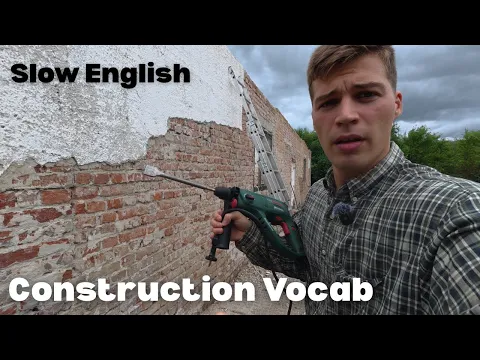
建設英語:必須語彙とフレーズ
このガイドでは、現場監督、積算士、土木技術者、プロジェクトマネージャー、建設専門家が必要とするプロフェッショナルな英語語彙を網羅しています。現場安全・構造用語から契約、仕上げ、工程管理まで幅広く取り上げます。
48 terms · 6 topics
"site induction"
A mandatory briefing given to all workers before they begin work on a new construction site
"Every subcontractor must complete the site induction before they are allowed to enter the work zone."
"trade package"
A defined scope of work awarded to a specialist subcontractor, such as electrical or plumbing work
"The main contractor issued the mechanical trade package to a specialist pipework firm."
"works programme"
A detailed schedule showing the sequence and timing of all construction activities
"The project manager updated the works programme after the steel delivery was delayed by two weeks."
"snagging list"
A list of minor defects or unfinished items identified near the end of a project that must be rectified before handover
"The client's surveyor walked the building and produced a snagging list of 47 items for the contractor to address."
"mobilisation"
The process of bringing personnel, equipment, and materials onto site in preparation for starting work
"Mobilisation was scheduled for Monday, with cranes and welfare facilities arriving first."
"practical completion"
The stage at which a building is substantially finished and fit for its intended use, triggering handover to the client
"Practical completion was certified on 15 March, allowing the client to move in while minor works continued."
"daywork"
Work carried out on a time-and-materials basis rather than against a fixed-price contract item
"The unexpected rock excavation was agreed as daywork and recorded on the daily site sheets."
"as-built drawings"
Revised construction drawings updated to show exactly how the building was constructed, including any changes made on site
"The contractor submitted as-built drawings to the client at handover so the facilities team could manage maintenance."
"method statement"
A written document describing the step-by-step procedure for carrying out a particular construction task safely
"Before the scaffolders started work, they submitted a method statement explaining how they would erect the structure."
"risk assessment"
A systematic process of identifying hazards, evaluating the likelihood and severity of harm, and determining control measures
"A risk assessment was completed for the confined space entry, identifying the need for continuous gas monitoring."
"permit to work"
A formal written document authorising specific high-risk work under controlled conditions
"The hot works permit to work was signed off by the site manager before the welders began cutting."
"PPE"
Personal Protective Equipment — safety gear such as helmets, high-visibility vests, gloves, and steel-toe boots worn by workers
"The site rules required full PPE — hard hat, hi-vis, steel-capped boots, and safety glasses — at all times on site."
"near miss"
An unplanned event that did not result in injury or damage but had the potential to do so
"The foreman reported a near miss after a scaffold board slipped and fell close to a worker below."
"toolbox talk"
A short, informal safety briefing given to workers at the start of a shift to discuss a specific hazard or safe practice
"The site supervisor ran a toolbox talk on working at height before the roofers began laying tiles."
"COSHH assessment"
A Control of Substances Hazardous to Health assessment — an evaluation of risks from chemical or biological substances used on site
"A COSHH assessment was carried out for the epoxy resin flooring compound before application began."
"exclusion zone"
A designated area around a hazard or operation from which unauthorised personnel are barred
"An exclusion zone was established beneath the tower crane to protect workers from falling materials."
"contract sum"
The total fixed price agreed between the client and contractor for the execution of the works
"The contract sum of £4.2 million included all labour, materials, and preliminaries but excluded VAT."
"variation order"
A formal instruction issued under the contract to change the scope, specification, or sequence of the works
"The architect issued a variation order to upgrade the glazing specification following the client's design review."
"retention"
A percentage of the contract value withheld by the client as security against defects until the end of the defects liability period
"A 5% retention was held on all interim payments, with half released at practical completion."
"interim valuation"
A periodic assessment of the value of work completed to date, used as the basis for a payment application
"The quantity surveyor prepared the monthly interim valuation and submitted it to the client's project manager for certification."
"bill of quantities"
A document listing all the measured work items in a construction project with quantities, used for tendering and cost control
"Tenderers were required to price the full bill of quantities and return it with their tender submission."
"liquidated damages"
A pre-agreed financial penalty per day or week that the contractor must pay the client if the project is completed late
"Liquidated damages of £5,000 per day were applied after the contractor overran the agreed completion date."
"contra charge"
A cost deducted from a subcontractor's payment to cover expenses the main contractor incurred due to the subcontractor's failure
"The main contractor issued a contra charge to the brickwork subcontractor for the cost of clearing up their waste."
"defects liability period"
The contractual period after practical completion during which the contractor must return to fix any defects that emerge
"During the twelve-month defects liability period, the contractor attended site three times to address reported issues."
"bearing capacity"
The maximum load per unit area that the ground can safely support without excessive settlement or failure
"A geotechnical investigation confirmed the bearing capacity of the clay was sufficient for a pad foundation design."
"pile cap"
A thick reinforced concrete slab placed on top of a group of piles to distribute column or wall loads evenly
"The structural engineer detailed a pile cap connecting four bored piles to support the corner column."
"reinforcement schedule"
A document listing all the steel reinforcement bars required for a concrete element, including bar sizes, lengths, and bending shapes
"The site engineer checked the reinforcement schedule before the rebars were cut and bent in the steel yard."
"formwork"
Temporary moulds or shuttering into which concrete is poured and held until it has cured and gained sufficient strength
"The carpenters erected formwork for the ground-floor slab and the crew poured concrete the following morning."
"compaction"
The process of mechanically pressing fill material or soil to reduce air voids and increase density and strength
"Each 200mm layer of fill was tested for compaction before the next layer was deposited."
"setting out"
The process of transferring the design positions of walls, columns, and features from drawings onto the ground using survey equipment
"The surveyor completed setting out for all ground-floor columns before the formwork gang arrived on site."
"temporary works"
Structures erected to support or protect the permanent works or the workforce during construction, removed after use
"The engineer designed temporary works to shore up the adjacent building during the basement excavation."
"ground bearing slab"
A concrete floor slab that rests directly on the ground, relying on the soil for support rather than beams or piles
"The warehouse floor was designed as a 200mm ground bearing slab on a 150mm granular sub-base."
"render"
A coat of cement, lime, or polymer-based mortar applied to external or internal masonry walls to provide a smooth or textured finish
"The plasterers applied two coats of render to the external brick walls before the final painted finish."
"screed"
A thin layer of sand-cement or specialist compound laid on a concrete floor to provide a smooth, level surface for floor finishes
"A 75mm liquid screed was pumped across the entire ground floor to achieve the required levelness tolerances."
"curtain walling"
A non-structural external cladding system, typically of glass and aluminium, that hangs from the building frame
"The architect specified a full-height curtain walling system for the glazed atrium elevation."
"dry lining"
A method of finishing internal walls using plasterboard fixed to a metal or timber frame rather than traditional wet plaster
"The dry lining gang partitioned the open-plan floor into offices using metal stud and plasterboard systems."
"fall arrest system"
Safety equipment, including harnesses and anchor points, designed to stop a worker who falls from height
"Roofers were required to wear a fall arrest system and clip onto anchor points installed at ridge level."
"pointing"
The process of filling and finishing mortar joints in brickwork or stonework to improve durability and appearance
"The bricklayers returned to complete pointing on the exterior elevations after the mortar joints had dried."
"cavity wall insulation"
Insulating material installed within the gap between the inner and outer leaves of a cavity wall to improve thermal performance
"Cavity wall insulation was blown into the existing cavity to meet the updated building regulation U-values."
"movement joint"
A deliberate gap in a building structure or finish that allows for thermal expansion and contraction without causing cracking
"The structural engineer specified movement joints at every 6 metres along the brick facade to prevent cracking."
"critical path"
The longest sequence of dependent tasks in a project schedule whose delay will directly delay the overall completion date
"The structural steel erection sat on the critical path, so any delay there would push back the entire project."
"float"
The amount of time a task can be delayed without affecting the project completion date or the start of a successor task
"The internal fit-out had four weeks of float, giving the team flexibility to resequence work around material deliveries."
"earned value"
A project management metric comparing the budgeted value of work actually completed against the cost incurred and the original plan
"The monthly earned value report showed the project was 8% behind schedule and 3% over budget at the current stage."
"change control"
The formal process for reviewing, approving, and documenting any change to the project scope, cost, or programme
"The client's request for additional car parking was processed through the change control procedure before any work started."
"site meeting minutes"
An official written record of decisions, actions, and discussions from a regular construction progress meeting
"The project manager distributed the site meeting minutes within 48 hours so all parties could confirm their action points."
"procurement lead time"
The total time between placing an order for materials or equipment and their delivery to site
"The procurement lead time for the bespoke structural steelwork was 14 weeks, so the order was placed early."
"look-ahead programme"
A short-term rolling schedule, typically covering three to six weeks, showing planned activities in detail
"The site foreman prepared a three-week look-ahead programme each Friday for the client's review."
"design freeze"
The point in a project at which the design is finalised and no further changes are permitted without a formal variation process
"The client agreed to a design freeze at RIBA Stage 3 to avoid costly changes during construction."
よくある質問
建設の専門家にとって英語はなぜ重要ですか?
英語は国際建設契約、多国籍プロジェクトチーム、そして世界的な設計標準の作業言語です。国際的に活動する専門家は、契約の読解と交渉、技術仕様書の理解、安全衛生規制の遵守、そして異なる国のクライアント、コンサルタント、下請業者とのコミュニケーションのために高い英語力が必要です。建設現場でのコミュニケーション不足は、ミス、事故、高コストな紛争のリスクを直接高めます。
建設英語にはどのような語彙が必要ですか?
建設英語は6つの主要分野にわたります:現場作業(モビライゼーション、実用的完成、スナッギング)、安全衛生(作業手順書、リスクアセスメント、作業許可)、契約と商務(工事数量書、変更指示、留保金)、構造・土木工学(型枠、支持力、測量)、建築仕上げ(モルタル塗り、セルフレベリング、カーテンウォール)、プロジェクト管理(クリティカルパス、アーンドバリュー、変更管理)です。
建設分野のプロフェッショナル英語を習得するにはどのくらい時間がかかりますか?
一般英語がB2レベルの建設専門家は、通常、集中的な学習を6か月〜1年続けることで自信を持ってプロとして使える英語力に達します。特に本物のコンテンツ——契約書の読解、建設プロジェクト動画の視聴、実際のプロフェッショナルなコミュニケーションの聴取——に没入することが効果的です。技術語彙は英語環境での実務を通じて早く身につきますが、交渉や正式な会議で完全な自信を持つには通常2年以上かかります。
建設英語を学ぶ最善の方法は何ですか?
理解可能なインプットが最も効果的なアプローチです。実際の建設契約書、仕様書、安全書類を英語で読み、建設プロジェクト動画、プロジェクト管理のウォークスルー、現場安全訓練を視聴することを意味します。孤立した語彙リストではなくコンテキストの中での本物の言語への接触が、建設専門家が使用するレジスター、構造、正確な技術的意味を吸収するのに役立ちます。定期的な聴読と計画的な語彙復習を組み合わせて最速の結果を得てください。
動画を通じて建設英語を学べますか?
はい、動画は話し言葉と視覚的なコンテキストを組み合わせるため、建設英語に最適なフォーマットの一つです。現場ウォークスルー、プロジェクト引き渡しレビュー、安全訓練フィルム、建設ドキュメンタリーコンテンツを視聴することで、実際のプロフェッショナルな会話、使用中の技術用語、国際プロジェクトで求められる特定のコミュニケーションスタイルに触れられます。自分のレベルに合ったコンテンツから始め、徐々に難易度の高い素材に移行してください。
プロフェッショナル英語を最も速く吸収する方法は、理解可能なインプット——自分のレベルに合った本物の建設コンテンツです。
実際の動画で練習する →