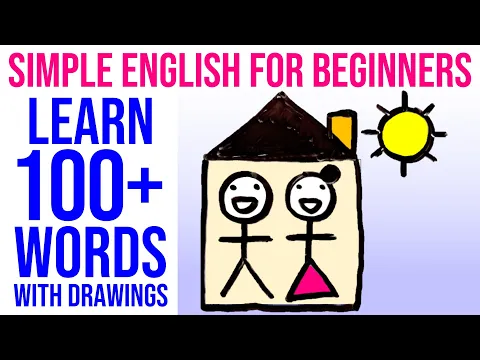
Inglês para iniciantes: vocabulário e frases essenciais
Tudo que você precisa para começar a falar inglês desde o primeiro dia — saudações, números, verbos-chave e frases essenciais para iniciantes.
48 items · 6 topics
"Hello"
A standard greeting used at any time of day
"Hello! How are you today?"
"Good morning"
Greeting used in the morning before noon
"Good morning! Did you sleep well?"
"Good afternoon"
Greeting used from noon to evening
"Good afternoon, everyone. Let's begin the meeting."
"Good evening"
Greeting used in the evening or at night
"Good evening! Welcome to our restaurant."
"Goodbye"
A farewell expression when leaving
"Goodbye! See you tomorrow."
"See you later"
Informal farewell meaning you will meet again
"See you later! Have a great day."
"Nice to meet you"
Said when meeting someone for the first time
"Nice to meet you! I'm John."
"How are you?"
A common greeting asking about someone's wellbeing
"Hi! How are you? I'm fine, thanks."
"One, two, three"
The first three cardinal numbers
"One, two, three — let's go!"
"What time is it?"
Asking for the current time
"Excuse me, what time is it? It's three o'clock."
"It's half past two"
Expressing 2:30 in spoken English
"The bus leaves at half past two."
"Yesterday, today, tomorrow"
Three basic time references
"Yesterday was Monday, today is Tuesday, tomorrow is Wednesday."
"In the morning"
Referring to the AM hours of the day
"I always have coffee in the morning."
"At noon"
Exactly at 12:00 midday
"We have lunch at noon."
"First, second, third"
Ordinal numbers for sequence
"She finished first in the race."
"How long does it take?"
Asking about the duration of something
"How long does it take to get to the airport?"
"to be"
The most fundamental verb — am, is, are
"I am a student. She is from Brazil."
"to have"
To possess or own something
"I have a blue pen. Do you have time?"
"to go"
To move from one place to another
"I go to school every day."
"to want"
To desire or wish for something
"I want a glass of water, please."
"to like"
To find something pleasant or enjoyable
"I like pizza. Do you like coffee?"
"to need"
To require something as necessary
"I need help with this exercise."
"to understand"
To comprehend the meaning of something
"I don't understand. Can you repeat that?"
"to speak"
To talk or communicate verbally
"Do you speak English? — A little."
"a book"
A written or printed work with pages
"I read a book every night before bed."
"a phone"
A device used for communication
"My phone is on the table."
"a bag"
A container used to carry items
"I put my lunch in my bag."
"a key"
A small metal tool for opening locks
"I can't find my key!"
"a window"
A glass opening in a wall for light and air
"Please open the window — it's hot."
"a chair"
A piece of furniture for sitting
"Pull up a chair and sit down."
"a cup"
A small container for hot drinks
"Can I have a cup of tea, please?"
"a pen"
A writing instrument with ink
"Do you have a pen I can borrow?"
"Please"
Used to make a request more polite
"Can I have some water, please?"
"Thank you"
An expression of gratitude
"Thank you for your help!"
"You're welcome"
A polite response to thank you
"Thank you! — You're welcome."
"Excuse me"
Used to get attention or apologize for a minor interruption
"Excuse me, where is the bathroom?"
"I'm sorry"
An apology for a mistake or inconvenience
"I'm sorry I'm late."
"No problem"
An informal way to say it's okay
"Thank you! — No problem at all."
"Could you help me?"
A polite request for assistance
"Could you help me find the station?"
"I don't understand"
Saying you haven't comprehended something
"I'm sorry, I don't understand. Can you say it again?"
"What?"
Asking about a thing or fact
"What is your name?"
"Who?"
Asking about a person
"Who is your teacher?"
"Where?"
Asking about a place or location
"Where do you live?"
"When?"
Asking about a time
"When does the class start?"
"Why?"
Asking for a reason or explanation
"Why are you late?"
"How?"
Asking about the manner or way of doing something
"How do you say this in English?"
"How much?"
Asking about the price or quantity of uncountable things
"How much does this cost?"
"How many?"
Asking about the number of countable things
"How many students are in your class?"
Perguntas frequentes
Qual é a melhor maneira de começar a aprender inglês?
Comece com as 300-500 palavras mais comuns: saudações, verbos básicos, números e frases cotidianas. Use-as em frases reais todos os dias.
Quanto tempo leva para atingir o nível iniciante A1-A2?
Com prática diária consistente de 20-30 minutos, a maioria dos alunos atinge o nível A2 em 3-6 meses.
Devo aprender as regras gramaticais primeiro?
Não — aprenda gramática através de padrões, não de regras. Concentre-se primeiro em frases e sentenças de alta frequência.
Quais são as palavras mais importantes para iniciantes?
As 100 palavras mais comuns cobrem aproximadamente 50% de todo o texto falado. Foque em: I, you, the, a, is, are, have, do, go, want, need, like.
Como posso praticar inglês quando não tenho com quem conversar?
Use aplicativos de idiomas, assista vídeos em inglês no YouTube com legendas, repita frases em voz alta de programas de TV.
Pronto para ouvir inglês real? Assista vídeos curtos com legendas.
Pratique com vídeos →