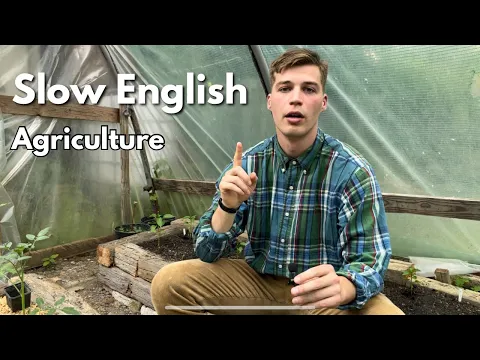
Inglês para Agricultura: Vocabulário e Frases Essenciais
Este guia cobre o vocabulário inglês essencial que agricultores, agrônomos, profissionais de agronegócio e estudantes de agricultura precisam para se comunicar com eficácia em contextos internacionais.
48 terms · 6 topics
"crop rotation"
the practice of growing different types of crops in the same field in successive seasons
"Farmers use crop rotation to maintain soil fertility and reduce pest pressure."
"irrigation system"
a network of canals, pipes, or sprinklers used to supply water to crops
"Installing a drip irrigation system reduced our water usage by 40 percent."
"germination"
the process by which a plant sprouts from a seed
"Warm soil temperatures are essential for rapid germination of corn seeds."
"tillage"
the preparation of soil for farming by ploughing, harrowing, or cultivating
"Reduced tillage practices help preserve soil structure and reduce erosion."
"yield"
the amount of a crop produced per unit of land
"This season's wheat yield was significantly higher thanks to improved varieties."
"cover crop"
a crop planted primarily to protect and enrich soil rather than for harvest
"The farmer planted a clover cover crop over winter to fix nitrogen in the soil."
"sowing season"
the period of the year when seeds are planted in the ground
"Farmers prepare their equipment well before the sowing season begins in spring."
"blight"
a plant disease that rapidly destroys leaves, stems, or fruits
"The potato blight devastated the crop and forced an early harvest."
"grazing rotation"
moving livestock between different pastures to prevent overgrazing
"The rancher implemented a strict grazing rotation to keep the pastures healthy."
"farrowing"
the process of a sow giving birth to piglets
"The farrowing crates provide a safe space for newborn piglets during the first weeks."
"stocking rate"
the number of animals kept per unit area of land
"We had to lower the stocking rate after a drought reduced the pasture capacity."
"weaning"
the process of separating young animals from their mothers and transitioning them to solid feed
"Calves are usually ready for weaning at around six to eight months of age."
"vaccination programme"
a scheduled plan of injections to protect livestock from infectious diseases
"Our vet designed a vaccination programme tailored to the diseases common in this region."
"feed conversion ratio"
a measure of how efficiently an animal converts feed into body weight
"Improving the feed conversion ratio is key to reducing production costs on the farm."
"artificial insemination"
a breeding technique in which semen is manually introduced into a female animal
"Artificial insemination allows farmers to use genetics from top bulls without transportation."
"herd management"
the overall planning and control of a livestock group's health, nutrition, and reproduction
"Good herd management requires detailed records of each animal's health history."
"soil pH"
a measure of how acidic or alkaline the soil is, on a scale from 0 to 14
"The lab test showed the soil pH was too low, so we applied lime to raise it."
"organic matter"
decomposed plant and animal material in the soil that improves fertility and structure
"Adding compost increases organic matter and helps the soil retain moisture."
"nutrient deficiency"
a lack of an essential mineral element needed for healthy plant growth
"Yellow leaves on the maize indicated a nitrogen nutrient deficiency."
"soil erosion"
the wearing away of topsoil by wind or water
"Planting windbreaks and cover crops helps control soil erosion on hillside farms."
"topsoil"
the uppermost layer of soil, richest in nutrients and organic matter
"Years of intensive farming had stripped away most of the topsoil."
"compaction"
the compression of soil particles that restricts root growth and water infiltration
"Heavy machinery caused serious compaction that reduced crop yields."
"aeration"
the process of loosening soil to allow air and water to penetrate more effectively
"Aeration of the pasture improved drainage and encouraged deeper root growth."
"nitrogen fixation"
the process by which certain bacteria convert atmospheric nitrogen into a form plants can use
"Legumes support nitrogen fixation through bacteria living in their root nodules."
"commodity price"
the market price of a raw agricultural product such as wheat, cotton, or soybeans
"A rise in commodity prices gave farmers more revenue but worried food processors."
"supply chain"
the sequence of steps from production to the delivery of a product to the consumer
"Disruptions in the global supply chain led to shortages of key fertilisers."
"subsidy"
financial support provided by a government to assist agricultural producers
"The new subsidy made it easier for small farmers to invest in modern irrigation."
"futures contract"
an agreement to buy or sell a commodity at a predetermined price on a future date
"The cooperative used futures contracts to lock in a good price for the wheat harvest."
"quota"
a government-imposed limit on the quantity of a product that can be produced or imported
"The import quota on sugar protects domestic producers from cheaper foreign competition."
"value chain"
the full range of activities that add value to a product from farm to consumer
"Investing in processing facilities allowed the cooperative to capture more of the value chain."
"market access"
the ability of a producer to sell goods in a particular domestic or international market
"Meeting EU phytosanitary standards improved the country's market access for fresh fruit."
"farm gate price"
the price a farmer receives for produce at the point of sale before transport costs
"Low farm gate prices made it barely profitable to grow strawberries that season."
"combine harvester"
a large machine that reaps, threshes, and cleans grain crops in a single operation
"The combine harvester completed the entire wheat field in a single afternoon."
"precision agriculture"
the use of GPS, sensors, and data analysis to manage crops at a very detailed level
"Precision agriculture allowed us to apply fertiliser only where it was actually needed."
"GPS guidance system"
a satellite-based system that steers farm machinery along exact paths
"The GPS guidance system reduced overlapping passes and saved a significant amount of fuel."
"drone spraying"
the use of unmanned aerial vehicles to apply pesticides or fertilisers to crops
"Drone spraying is particularly useful on steep slopes where tractors cannot operate safely."
"plough"
a large farming implement used to turn and break up soil before planting
"The farmer used a disc plough to prepare the field for the autumn barley crop."
"seed drill"
a machine that sows seeds at a controlled depth and spacing in the soil
"A no-till seed drill deposits seeds directly into untilled soil to reduce erosion."
"telematics"
the remote monitoring of farm machinery performance and location using digital sensors
"The telematics system sent an alert when the combine harvester developed a mechanical fault."
"soil sensor"
an electronic device inserted in the ground to measure moisture, temperature, or nutrient levels
"Soil sensors transmit real-time data to the farmer's smartphone, enabling precise irrigation."
"carbon footprint"
the total greenhouse gas emissions caused by farming activities
"Switching to renewable energy on the farm significantly reduced our carbon footprint."
"organic farming"
a method of agriculture that avoids synthetic chemicals and relies on natural processes
"Organic farming certification opened new premium markets for the vegetable producer."
"agroforestry"
a land-use system that integrates trees with crops or livestock for mutual benefits
"Agroforestry provides shade for cattle while the trees sequester carbon from the atmosphere."
"water table"
the underground level at which soil is saturated with water
"Excessive irrigation in the valley has caused the water table to rise dangerously high."
"biodiversity"
the variety of plant and animal species in a given ecosystem or farm environment
"Planting wildflower strips along field margins greatly increased on-farm biodiversity."
"greenhouse gas emissions"
gases such as methane and carbon dioxide released by farming that contribute to climate change
"Methane from cattle is one of agriculture's most significant greenhouse gas emissions."
"regenerative agriculture"
farming practices designed to restore soil health, biodiversity, and ecosystem services
"Regenerative agriculture goes beyond sustainability by actively improving the land."
"water runoff"
water that flows over the land surface rather than soaking into the soil, often carrying sediment
"Buffer strips along waterways help reduce water runoff and protect rivers from pollution."
Perguntas frequentes
Por que o inglês é importante para profissionais da agricultura?
O inglês é o idioma dominante da pesquisa agrícola internacional, do comércio e das políticas. Profissionais que conseguem ler revistas científicas, negociar contratos de commodities e se comunicar com parceiros no exterior em inglês têm uma grande vantagem competitiva no setor agroalimentar global.
Qual vocabulário preciso para a agricultura em inglês?
Você precisa de vocabulário em várias áreas: gestão de cultivos (cultivo, irrigação, rendimento), pecuária (criação, alimentação, saúde do rebanho), ciência do solo (pH, nutrientes, erosão), agronegócio (commodities, cadeia de suprimentos, subsídios), maquinário agrícola e sustentabilidade.
Quanto tempo leva para aprender inglês profissional para a agricultura?
Com estudo focado, a maioria dos alunos pode alcançar um nível profissional funcional em inglês agrícola em seis a doze meses. A exposição diária constante a conteúdo agrícola real em inglês — artigos de pesquisa, notícias do setor e vídeos instrutivos — acelera o progresso consideravelmente.
Qual é a melhor maneira de aprender inglês para a agricultura?
A abordagem mais eficaz combina o estudo de vocabulário técnico com o insumo compreensível: assistir documentários agrícolas, ouvir podcasts do setor e ler publicações especializadas em inglês. Esse método constrói fluência natural junto com conhecimento especializado.
Posso aprender inglês agrícola através de vídeos?
Com certeza. Conteúdo de vídeo, como visitas a fazendas, demonstrações de maquinário, palestras de agronomia e documentários, fornece linguagem autêntica em um contexto significativo. Assistir conteúdo ligeiramente acima do seu nível atual, com legendas, é uma excelente estratégia de insumo compreensível.
A maneira mais rápida de absorver o inglês profissional é através do insumo compreensível — conteúdo real no seu nível.
Pratique com vídeos reais →